

Why Gaza’s anti-Hamas protests failed to materialise
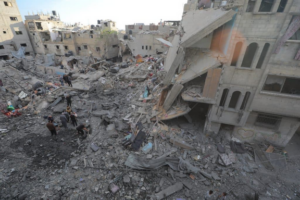
Aftermath of an Israeli airstrike targeting the home of the al-Tawil family in Nuseirat refugee camp, central Gaza, 26 May 2026
Sally Ibrahim writes in The New Arab on 7 July 2026:
As evening fell, the scene across the war-torn Gaza Strip looked very different from what organisers of the so-called ‘June 26 movement’ had envisioned.
While small gatherings did take place, the public squares designated for demonstrations remained largely empty, while major intersections saw little sign of the mass mobilisation promoted on social media.
Instead, residents went about the routines that have come to define life after more than a thousand days of war: queuing for water, searching for food, and anxiously following news of humanitarian aid, far removed from any large-scale protest against Hamas.
For several weeks, the ‘June 26 Movement’ had been promoted on social media as a popular uprising against Hamas’s rule in Gaza. So why did widespread anger over Gaza’s catastrophic conditions fail to translate into a broad social movement?
The reasons are manifold, experts and residents say. More than a thousand days of bombardment, displacement, and economic collapse have reshaped not only Gaza’s physical landscape but also its political psychology. Survival has increasingly displaced political mobilisation as the overriding concern for much of the population.