

Airstrike on girls’ school in Iran, killing scores of students, grave crime & breach of international law
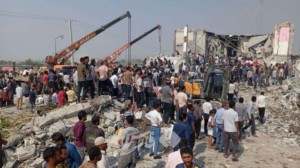
Rescue teams of the Iranian Red Crescent and local citizens working to pull victims from the rubble of a school destroyed in a US-Israeli airstrike in Hormozgan province, 28 February 2026
Euro-Med Human Rights Monitor reports on 1 March 2026:
The bombing of a girls’ primary school in southern Iran, which resulted in the killing of 148 students and the injury of dozens more, is profoundly reprehensible. This tragic event is among the most severe attacks on a civilian educational institution amid the US-Israeli military escalation against Iran.
Euro-Med Human Rights Monitor reviewed the preliminary information about the attack on Saturday morning, 28 February, targeting a girls’ primary school in Minab, Hormozgan province, which had 170 students plus staff. The attack caused 148 students to be killed and dozens to be injured.
The circulating video footage shows extensive destruction of the school building, reinforcing strong indications that the strike hit a civilian educational facility protected under international humanitarian law. Allegations regarding the presence of military facilities elsewhere in Hormozgan Province do not alter the school’s civilian character or justify targeting it. The obligation to verify the nature of the target and to take all feasible precautions before and during an attack remains incumbent upon the attacking party without exception.
Placing educational facilities within the scope of hostilities, whether by directly targeting them or exposing them to the risk of attack, reflects a serious erosion of respect for the rules protecting civilians
Schools are protected civilian objects, and students and teaching staff are protected civilians. Any deliberate attack on a school or on civilians, as well as any indiscriminate or disproportionate attack that violates the principles of distinction and proportionality, constitutes a grave breach and may amount to a war crime where intent to target the school is established or where the attack is indiscriminate or disproportionate.
Placing educational facilities within the scope of hostilities, whether by directly targeting them or exposing them to the risk of attack, reflects a serious erosion of respect for the rules protecting civilians. It undermines the core protection regime established under international humanitarian law for civilians and civilian objects. Attacks on schools result not only in immediate deaths and injuries but also in the disruption of education, the erosion of children’s sense of safety, and the imposition of fear and collective trauma, thereby directly affecting the rights to life, education, and personal security.
All parties must spare civilians, particularly children, from the effects of hostilities, refrain from attacks directed against civilian gatherings or civilian objects and ensure respect for the special protection afforded to schools and other educational facilities. They must also refrain from using prohibited weapons or any means of warfare that are inherently indiscriminate, whose effects cannot be limited, or that cause excessive harm contrary to the requirements of international humanitarian law.
Euro-Med Monitor underscores the need for strict compliance with the rules of international humanitarian law, foremost among them the principle of distinction, the prohibition of indiscriminate attacks, the principle of proportionality, and the duty to take all feasible precautions before and during attacks to avoid or minimise civilian harm to the greatest extent possible. This involves verifying the target, choosing methods that minimise civilian harm, and halting an attack if it risks being disproportionate or affecting civilian objects. Furthermore, effective warnings must be given whenever possible.