

Venice Biennale jury will refuse to consider Israel and Russia for awards
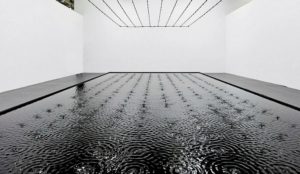
Belu-Simion Fainaru’s ‘Rose of Nothingness’ representing Israel at the Venice Biennale 2026
Naama Riba reports in Haaretz on 26 April 2026:
The jury of the 61st Venice Biennale announced that they would “refrain” from considering artists from countries “whose leaders are currently charged with crimes against humanity by the International Criminal Court.” The Biennale is scheduled to open to the general public on May 9 and will run for six months.
The statement was submitted to Biennale management and the Venice municipality last Thursday. However, the five-member jury did not specify which countries they intended to exclude. Italian media reported that the reference was to Israel and Russia, which is participating in the Biennale for the first time in several years, rather than to countries accused of human rights violations such as China, Iran, or Qatar.
Israel is expected to participate after not taking part in last year’s Venice Biennale of Architecture, and after artist Ruth Patir, who represented Israel in 2024, chose to keep Israel’s pavilion closed. This year, the permanent Israeli pavilion in the Giardini, located alongside the American pavilion, is undergoing renovations. As a result, Israel’s pavilion will be situated in the Arsenale area, the Biennale’s second main hub.
The president of the international jury is Solange Oliveira Farkas, a Brazilian curator who founded an international art institution in São Paulo focused on video art and performances from the Global South. Other jurors include Vietnamese-Australian curator Zoe Butt; Spanish curator Elvira Dyangani Ose, recently appointed artistic director of the Public Art Abu Dhabi Biennial; American curator Marta Kuzma, daughter of Ukrainian immigrants and professor at the Yale School of Art; and Italian art historian Giovanna Zapperi, a professor at the University of Geneva.
“As members of the jury,” the statement reads, “we also have a responsibility toward the historical role of the Biennale as a platform that connects art to the urgencies of its time. We acknowledge the complex relationship between artistic practice and nation-state representation that provides a central structure for the Venice Biennale, particularly the way this relation binds artists’ work with the actions of the state they represent.
“At this edition of the Biennale, we wish to set out our intention to express our commitment to the defense of human rights and to the spirit of Koyo Kouoh’s curatorial project. Consequently, this jury will refrain from considering those countries whose leaders are currently charged with crimes against humanity by the International Criminal Court.”
The decision comes amid tensions and numerous petitions issued in recent months against Israel, Russia and the United States. The European Union recently announced it would cut €2 million from the Biennale budget if Russia participates, and Italy’s culture minister has also publicly condemned the matter. The Art Not Genocide Alliance (ANGA), which organized protests against Israel and the United States in 2024, is continuing similar efforts.
In addition, dozens of artists, curators and art professionals participating in the main exhibition or national pavilions appealed to Biennale management last month, requesting the exclusion of Israel, the United States and Russia from the event.
The exhibition management did not issue an official response to the judges’ statement. However, local media cited the management’s earlier response to previous protests, describing the Biennale as an “open institution that rejects any form of exclusion or censorship of culture and art.”
The first official response came from Venice Mayor Luigi Brugnaro, who told Italian journalists on Thursday: “The judges wrote to us that they cannot award prizes because the governments are under investigation by the International Criminal Court. This is an independent choice which we respect, just as the Biennale is independent in choosing to have these pavilions.”
Belu-Simion Fainaru, a Romanian-born Israeli artist and sculptor, represents Israel at this year’s Biennale with an installation called “Rose of Nothingness.” Fainaru responded to the jury’s statement by forwarding a letter from Prof. Michael Levin, president of the International Association of Art Critics in Israel.
“We believe that art should remain an open opportunity for the expression of ideas and meaningful discourse,” the letter states. “It is a universal language that provides opportunities for the exchange of ideas and critical thinking through multilayered artistic meanings.
“The Venice Biennale should remain an open opportunity for every selected artist to present their art without censorship. Belu-Simion Fainaru has demonstrated through his art and his many years of work as a curator his commitment to dialogue, openness to the art world and tolerance toward the views of other artists. His installation… will contribute to the universal exchange of art at the international event in Venice. We oppose boycotts of art on international platforms. Art should remain outside any censorship. We should respect artists’ freedom to express their positions.”
This article is reproduced in its entirety