

Newly approved West Bank settlements to be built on private Palestinian land, map shows
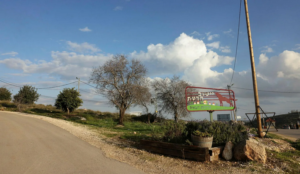
The Yishuv Hada’at outpost, which is among the settlements approved by the government for legalization
Matan Golan, Yaniv Kubovich and Jonathan Lis report in Haaretz on 14 April 2026:
Three weeks after Israel’s security cabinet approved the establishment of a dozen new settlements in the West Bank, the state has yet to publish the details, but a list obtained by Haaretz shows the plan envisions sites spread across the territory.
According to the list obtained by Haaretz, the plan includes 34 settlements: 20 new communities, nine existing outposts slated for legalization, two expansions of existing settlements and three that would be split off from existing ones.
Seven of the approved settlements are in the area of the Mateh Binyamin Regional Council, seven in the Jordan Valley Regional Council, six within the Gush Etzion Regional Council, four in the South Hebron Hills Regional Council and one is located in the Megilot Dead Sea Regional Council.
Since the current government took office in 2022, the regularization of 102 settlements has been approved, though in previous cases, the list was published within days of cabinet approval.
Sources in the Religious Zionism party told Haaretz that the list approved by the security cabinet on March 25 is classified, though it is not. According to the data, nine settlements were approved in the Samaria Regional Council, the highest number on the list. This comes amid the amendments to the Disengagement Law and a broader push to expand settlement in the northern West Bank, in line with the council’s “Million in Samaria” plan to attract new residents to the area.
Five of the settlements, “Alonei Shomron,” “Rom Gilboa,” “Ma’ayanot,” “Ta’anakh” and “Noa,” are slated to be established in the northern West Bank, an area with no prior Israeli presence. Their location amid Palestinian villages is expected to require a significant military presence, with access possible only through those villages or via roads designated for military use.
Eight of the settlements are planned on privately owned Palestinian land, while only 15 of the 34 are slated to be built on designated state land, according to the Civil Administration.
State land refers to public land administered by the sovereign authority in the West Bank, which is the military government headed by the IDF Central Command. Under international law, such land is to be used for the benefit of the local Palestinian population, and not for settlement by citizens of the occupying power.
In practice, however, more than 99 percent of state land allocated by the military has been designated for Israeli settlements, according to data disclosed following a petition by the Bimkom nonprofit and the Association for Civil Rights in Israel.
The security cabinet’s decision also included the establishment of at least three settlements in firing zones, even though Palestinian communities residing in other firing zones were previously expelled because the IDF needed them.
It was also decided that three outposts would be legalized, after whose establishment, nearby Palestinian communities were expelled.
One of the sites is the Giborei David outpost, east of the Palestinian town of Duma in the northern West Bank. Violence by settlers from the outpost has led 11 Palestinian families from a nearby Bedouin community to leave their homes. The settlement is expected to be built on land belonging to the displaced community, most of it recognized as privately owned Palestinian property, with no state land in the vicinity.
Opposition lawmaker Gilad Kariv responded to the approval of the outposts, stating that “the Israeli government continues its de facto annexation frenzy and the legalization of illegal outposts.” Gilad said the approval significantly undermines the IDF’s ability “to defend communities along Israel’s northern border, the seam zone and the country’s other frontiers,” and reflects a clear prioritization of settlements over the Galilee and the Negev.
He also called on opposition members “to present a clear alternative to the Netanyahu-Smotrich government regarding the [occupied] territories and their future.”
According to Kariv, “we must not be content with condemnations against Jewish terror while the government pushes Israel toward a security escalation in the territories and a bloody binational reality.”
A statement by the Peace Now movement said that the government “went into a frenzy ahead of the elections, to create as many facts on the ground as possible and leave Israel with scorched earth.”
The statement added that “it is clear to everyone, as noted by the army time and again, that the establishment of settlements harms security, places an abnormal burden on the IDF and hinders the possibility of resolving the conflict and achieving any future security and peace.”
Last month, Haaretz reported that during the cabinet meeting approving the settlements, IDF Chief of Staff Eyal Zamir warned the move was at odds with the military’s manpower needs, as force requirements continue to grow while troops are stretched across multiple active fronts, including Lebanon, Gaza and Syria.
“I am raising ten red flags,” Zamir warned the ministers.
This article is reproduced in its entirety