

Clinics closing, medications running out. Israel is now causing the West Bank health system to collapse
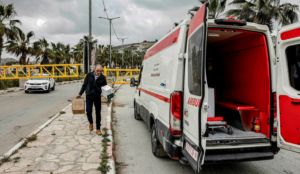
Boxes of medicine being transported from Turmus Ayya to hospitals in Nablus, June 2026
Amira Hass reports in Haaretz on 3 June 2026:
The Palestinian health system is fearing a worsening of the condition of chronic disease patients in the West Bank, and an increase in mortality rates due to the Palestinian Authority’s extreme budgetary distress and its population’s impoverishment. The Palestinian Health Ministry’s accumulated debt to external suppliers, 2.6 billion shekels, is almost equal to its current budget for 2025 – 2.89 billion shekels.
Like all public sector employees, doctors and nursing staff also receive half their salaries, or even less. Most medications are unavailable in government pharmacies, and the stock of life-saving medications, such as those for cancer and kidney diseases, is dwindling. Many patients covered by public health insurance cannot afford to purchase medication in the private market.
Medical professionals within and outside the government system describe the situation as “on the verge of collapse.” The Palestinian Health Ministry warned last week, before Eid al-Adha, that the ability to continue providing essential health services is at risk, noting that the crisis in the government sector has created a chain reaction, also harming health institutions of nongovernmental organizations and the private sector.
Doctors at the Dima Center for Infertility and IVF in Nabulus. Government hospitals are providing only life-saving treatments, with quality compromised by the crisis. Credit: Jaafar Ashtiyeh/AFP
The two direct and main causes of this situation are the Israeli Finance Ministry’s seizure of Palestinian Authority customs revenues on imports (after the ministry automatically deducts the PA’s payments for the supply of products such as water and electricity) and the ban on approximately 170,000 Palestinians from returning to their jobs in Israel.
Since the beginning of May, doctors and nursing staff in the Palestinian public sector in the West Bank have been on strike due to not been being paid full salaries for several years. Even before the strike, the staff worked only part-time, like other public sector employees.
Government hospitals are only providing life-saving treatments, and the quality of such treatments is compromised due to reduced staff, a shortage of medications and disposable medical equipment, and difficulties in funding routine maintenance and repair of existing equipment. The strike also includes 447 Health Ministry clinics, out of a total of 590 operating in the West Bank. Therefore, care and follow-up services for pregnant women, mothers and infants, disabled children, and schoolchildren are also affected.
The approximately 2.6 billion shekels debt accumulated by the Health Ministry is divided almost equally between nongovernmental hospitals – to which patients are referred for treatment – and approximately 30 pharmaceutical manufacturing and import companies.
This is according to Palestinian Health Minister Dr. Majed Abu Ramadan, who made these remarks at a meeting with representatives of pharmaceutical companies last week. The representatives heard from him that out of 1,260 types of medications the Health Ministry regularly purchases, 260 are currently in its warehouses and on its shelves.
One of the participants in this meeting was former Health Minister Dr. Fathi Abu Moghli, today a member of the Pharmaceutical Manufacturers Association. “Dr. Abu Ramadan urged the pharmaceutical companies to hold on and continue supplying medications to the ministry, despite the debt owed to them, which has reached 1.3 billion shekels,” Abu Moghli told Haaretz, adding that many of the companies would not be able to comply with this request because they no longer have the necessary capital to purchase medications abroad.
Transferring medicine from Turmus Ayya to hospitals in Nabulus, this month. Credit: Zain Jaafar/AFP
The director of the Pharmaceutical Suppliers Association, Muhannad Habash, said that in 2025 the companies did everything in their power to continue supplying medications on credit, but they are struggling to do so again this year. In an interview with Al-Raya Radio, Habash said that, since the beginning of the year, the Health Ministry has paid only 16 million shekels to pharmaceutical suppliers.
One of the six pharmaceutical manufacturing plants in the West Bank is Dar al-Shifa (PHARMACARE), whose director, Bassem Khoury, says the Health Ministry owes it approximately 20 million shekels. “But we will continue to supply the Health Ministry with medications we produce, such as antibiotics for children, and drugs for treating diabetes and high blood pressure, because it is our duty to the community,” Khoury told Haaretz, adding that the Health Ministry’s debt to other companies is much higher.
The other half of the enormous debt is owed to private hospitals. “Government hospitals have good doctors, but the waiting list for surgeries is very long,” S., a Palestinian surgeon who works in nonprofit hospitals in Jerusalem and the West Bank, told Haaretz. Abu Moghli says that due to chronic budgetary difficulties, the Health Ministry has been unable to increase the number of medical staff it employs over the years, despite many medical and nursing graduates being unemployed.
The reduced number of doctors in the public system is one reason the Health Ministry refers patients to private hospitals such as An-Najah in Nablus (a university hospital), Istishari Arab Hospital in Ramallah, and two hospitals in East Jerusalem, Makassed Hospital and Augusta Victoria Hospital, access to which requires an Israeli movement permit. Patients are also referred for treatment in Jordan and, less frequently than in the past, in Israel.
Medical professionals within and outside the government system describe the situation as “on the verge of collapse.” The Palestinian Health Ministry warned last week that the ability to continue providing essential health services is at risk
In 2024, there were 96,000 referrals for external treatments, which cost the Palestinian Health Ministry approximately 960 million shekels. Until October 2023, the Health ministry also covered referral of patients from the Gaza Strip to the West Bank and Jerusalem.
Due to the Palestinian Authority’s debt to private hospitals, surgeon S. told Haaretz, these hospitals are also forced to cut their employees’ salaries, and some of their bank accounts are overdrawn. Patients are even required to fund part of the essential disposable items for surgery, he said. Some patients take out loans or rely on help from friends to buy their regular medications.
Doctors and patients testify that due to the closure of clinics, the pressure on emergency rooms in government hospitals and on nongovernmental medical institutions has only increased. The stress and long waits for medical examinations create tensions between patients and their families, other patients and medical staff. Several cases of violence against doctors have also been reported.
An ambulance waiting for an Israel Defense Forces patrol force to open the road, so it can pass through the Qalandiyah refugee camp, this month. Credit: Zain Jaafar/AFP
The crisis in the health system has two additional factors, notes Dr. Mustafa Barghouti, director of the Palestinian Medical Relief Society, which provides nonprofit medical services. According to him, the number of people seeking care at the organization’s clinics has also increased. One factor is the direct and declared Israeli effort to remove from the area UNRWA – the UN Relief and Works Agency for Palestine Refugees in the Near East – and international aid organizations like Doctors Without Borders, as well as the closure order for several Palestinian civil society organizations. All of these organizations have been forced to reduce the medical care they provided or helped facilitate.
Another factor, he explained, is the more than 1,000 permanent checkpoints and roadblocks on West Bank roads, which prevent quick access to treatment and force medical teams and ambulances to travel on circuitous and winding routes, or to transfer patients and those wounded by Israeli gunfire using the “back-to-back” method – whereby a patient is transferred by vehicle or stretcher to a locked gate or roadblock at the exit of a locality, and then transferred to an ambulance on the other side. This is a budgetary burden and also harms the availability of staff. The extended travel time – which includes long waits at checkpoints manned by soldiers – also increases travel costs, and sometimes medical staff are forced to bear the expenses themselves and struggle to meet them.
S. recounts a specialist doctor who could not reach an urgent surgery at a Hebron hospital due to an army raid on his village and the blocking of its exit. B., a mother of a son with cerebral palsy, no longer sends him to a special school in Ramallah because the direct road out of their village has been blocked by a locked iron gate since October 7. “The ride in the special taxi became more expensive, and my husband stopped working in Israel. For a while, I could still pay for my son’s medications, but I haven’t bought them in two weeks” she said. According to Dr. Barghouti, “When you put together all the factors contributing to the health system crisis, the conclusion is that this is a result of careful and calculated planning.”
The Health Ministry has established an emergency team, headed by the ministry’s director general, Wael al-Sheikh (brother of Hussein al-Sheikh, vice president of the Palestinian Authority). Every now and then, a donation puts out one fire or another. The European Union assists Augusta Victoria Hospital, and according to Abu Moghli, it has also promised to transfer 23 million euros to West Bank hospitals and a similar amount to pharmaceutical suppliers. But these amounts are negligible compared to the ministry’s total debt.
Daily Brief
Start your day with Haaretz’s top headlines
The Palestinian economy was faltering even before the seizure of customs revenues became policy. As early as 2013, a World Bank report stated that Israeli control over most of the West Bank prevents the realization of the Palestinian society’s economic potential and causes it losses amounting to several billion dollars annually (3.4 billion dollars in 2011 terms). This constant loss has created a dependence on foreign donations, which have been decreasing over the years, and directly impacted the limited development budgets and low budgets of social ministries, such as education and health.
This article is reproduced in its entirety