

Israel begins seizing Palestinian private land around West Bank archeological site
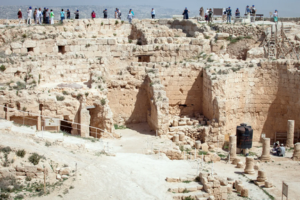
Herodion excavation site
Nir Hasson reports in Haaretz on 3 June 2026:
Israel’s Civil Administration in the West Bank has begun the process of expropriating 320 dunams (79 acres) of land near the Herodion archaeological site, including some that is privately owned by Palestinians.
Herodion is located near the Palestinian village of Zaatara, south of Bethlehem, and is surrounded by Israeli settlements that form the Gush Etzion settlement bloc.
The IDF’s Civil Administration said in a statement that the land is being expropriated “to preserve and protect archaeological and heritage sites.”
It added that the move “is expected to enable the expansion of preservation and research activities at the site, the discovery of additional archaeological and historical findings and the site’s development for generations to come.”
Israel’s expropriation of large swaths of land near West Bank archaeological sites is part of Prime Minister Benjamin Netanyahu’s government’s effort to extend Israeli control over the sites. Over the past year, the Civil Administration has launched proceedings for two other large-scale expropriations.
The first was 1,800 dunams (445 acres) near Tel Sebastia, northwest of Nablus in the northern West Bank, and the second, just last month, was 110 dunams near Nabi Samuel, north of Jerusalem. The land in Nabi Samuel, traditionally considered the grave of the prophet Samuel, was expropriated from the Waqf, a Muslim religious trust.
Herodion dates to the Roman era, some 2,000 years ago. It was built by King Herod to serve as a palace, a fortress and his tomb. In 2007, archaeologist Ehud Netzer found Herod’s grave inside a magnificent mausoleum that had been destroyed. Netzer speculated that the mausoleum was destroyed by Jewish rebels who hid there during the first revolt against Rome, from 66 to 70 C.E. In 1985, Herodion was declared a national park.
In January, the head of the Gush Etzion Regional Council, Yaron Rosenthal, announced a plan for a new tourist lookout over the historic pool at Herodion. Emek Shaveh, an Israeli anti-occupation group founded by archaeologists, assailed the plan at the time. “For this to happen, modern concrete would have to be poured to complete the arches that have fallen, the ancient canal would have to be plastered with industrial materials so it wouldn’t leak, and in practice, a 2,000-year-old relic would be turned into a modern sewage channel wrapped in antique decorations,” it said.
At the same time, discussions on the bill to establish an archeology authority in the West Bank have been halted due to opposition from Netanyahu, a coalition source told Haaretz on Tuesday. The bill stipulates that the authority to be established will receive, among other things, the authority to purchase and expropriate land, and that responsibility for this will be transferred from the Civil Administration to the new authority.
The bill, which was approved in the plenum on first reading about two weeks ago, has so far been advanced despite opposition from the Antiquities Authority, the Archaeological Council, the Ministry of Defense, the Knesset’s Legal Advisory Board, the National Academy of Sciences, and more.
Peace Now also assailed the decision to expropriate land near Herodion. “The government is trying to use every moment until the election to create more facts on the ground and lead to a full annexation of the West Bank,” it said.
“Tourism and archaeological sites are another type of settlement,” Peace Now said. The sites are meant “not just to seize control of large tracts of land, but also of our minds – to repress the Palestinian connection to the land and turn this land into one for Jews only, both in territory and in heritage,” it added.
“This policy will sentence us to more years of a painful and bloody conflict that will be solved only if we manage to reach a compromise over this land, which is dear to both Israelis and Palestinians.”
This article is reproduced in its entirety