

A message to all IDF soldiers: you may rampage, assault and abuse and you will never be punished
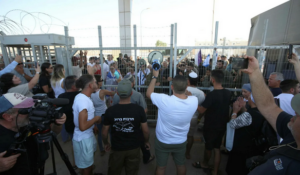
Riot outside Sde Teiman military base in 2024
The Haaretz lead editorial on 12 March 2026:
Military Advocate General Itai Offir’s decision to cancel the indictment against reservists charged with abusing a Palestinian detainee at the Sde Teiman base is a terrible one. It severely damages the rule of law, well beyond this specific case.
A lot of dirty water has flowed under the bridge since the day when, according to the canceled indictment, the five defendants, reservists in a unit called Force 100 serving at Sde Teiman, allegedly committed a string of offenses involving severe violence, grievous bodily harm and sadistic behavior against a Palestinian detainee who was bound hand and foot and blindfolded.
When they were arrested, some of the suspects and their supporters clashed with military policemen. In an unprecedented step, an inflamed mob accompanied by lawmakers broke into Sde Teiman and then into the military jail complex at the Beit Lid base. Later, due to a probe into the leak of video footage of the assault, the involvement of Offir’s predecessor in the leak came to light.
She resigned, was arrested in October and questioned along with other members of the MAG’s office on suspicion of committing serious crimes. Their case is expected to move forward.
Offir’s decision to drop the indictment seemingly included all the reasonable phrases – “evidentiary problems,” “violating their right to a fair trial,” “procedural problems.” For this reason, even if the decision is appealed, the court would apparently refrain from intervening. But the real problem stems from the message sent by closing the case.
The army is morally castrated when its heads – its top commander and the person responsible for upholding the rule of law in the military, i.e., the chief of staff and the military advocate general – don’t take serious action against shameful military conduct that falls short of any conceivable standard for military service, preserving human life and human dignity, and basic humanity.
De facto, this decision gives permission for and acceptance of sadistic behavior by soldiers in any area under their control. If the circumstances documented in this case – serious, nauseating violence perpetrated not during active combat, but inside the country, in a military facility, against a bound Palestinian detainee who, in that condition, posed no danger whatsoever – then the military justice system has given up on applying the law.
The message sent to the entire army is that you may rampage, assault, injure and abuse, and it will all be given a pass.
Instead of suffering public disgrace and serious punishment, the defendants are emerging as the victors. The poisonous ripples of this decision will spread far beyond this specific case. It reflects an organizational culture of permitting bestial conduct anywhere within the army and gives soldiers de facto permission to let out their basest, most primitive emotions instead of restraining their use of force. This decision has destroyed the army’s subordination to the law and to humane norms of behavior.
This article is reproduced in its entirety