

The struggle to save the Palestinian wheat fields on the front lines of Israeli settler violence
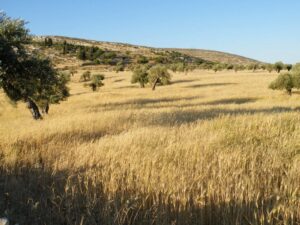
Wheat fields in the village of Yanoun outside of Nablus, 29 May 2009
Majd Jawad reports in Mondoweiss on 11 August 2026:
Every year, in the last evenings of spring, Hassan Kbeineh would watch the sky for the rise of the Pleiades — the cluster of seven bright stars that Palestinian farmers have long used to gauge the approach of the harvest season. When he spotted it, he would smile and repeat the proverb to his wife: “If the Pleiades rises in the evening, summer is on its way…bring the sickle.”
The sky wasn’t the only guide Kbeineh relied on. His wife watched for her own signs in the earth: tracking the wheat ears until they dried out, turned yellow, and moved past the milky stage into full hardness, when the grains become tough enough to resist weevils during storage.
When we arrived at the farm in the village of Sawiya to document the wheat’s life cycle, we found the crop already piled up in storage, well before the harvest was due. Surprised, we asked why they harvested the wheat so early.
“We weren’t watching for the Pleiades to rise this time,” he answered, turning over a handful of unripe wheat ears. “We were watching for settler attacks. We harvested the wheat before its time while it was still green, because we were afraid we’d be harvesting ashes instead.”
The Palestinian agricultural calendar has long served as a mirror of the environment, organizing farmers’ lives in lockstep with the changing seasons, the movement of the stars, and the cycles of rain. But the succession of Israel’s wars and manufactured crises has battered Palestinians and imposed a harsh political dimension upon nature’s rhythm. Road closures, denial of access to land, and repeated settler attacks have forced farmers to redraw their planting and harvest schedules. The wheat harvest has seen the most dramatic impact.