

Crimson Thread: The new Israeli separation wall that cuts through the ‘breadbasket of Palestine’
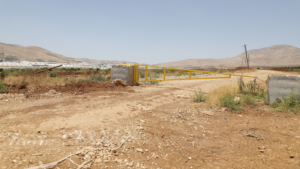
A barrier – Israeli settlers and soldiers have blocked Palestinians from accessing villages in the fertile Jordan Valley
Muhammad Ateeq and Fayha Shalash report in Middle East Eye on 25 June 2026:
Khairallah Bani Odeh feels as if he’s living in a giant prison. Forced to leave his lands in the village of Atouf in the northern Jordan Valley, he relocated to the town of Tammoun, south of Tubas, after a combination of settler attacks, water shortages and sweeping Israeli land grabs made life unbearable.
Like many Palestinians in the northern Jordan Valley, Bani Odeh relied on sheepherding and farming for his livelihood.
But since Israel began construction on a new separation wall and road that will cut through the Buqe’aa Plain, large areas of land have been swallowed up, reshaping daily life for residents. Israel has named the project “Crimson Thread”. It involves the construction of a 22-kilometre-long and 50-meter-wide separation wall and accompanying road along the eastern lands of Tubas.
The project will leave large parts of the Buqe’aa Plain and eastern Atouf behind the road and wall, making it impossible for farmers and shepherds to access their agricultural land and grazing areas.
Bani Odeh told Middle East Eye that when construction began, Israeli settlers used bulldozers to destroy water lines supplying hundreds of hectares of farmland in the plain, causing crop damage and leaving livestock without water. For many families, it was the final push to leave.
“They cut off our water supply, so I had to buy water from neighboring villages for the livestock. I used to walk long distances to fetch water. Then they burned the barley and made our lives unbearable, so we were forced to leave,” he added.
Dozens of families, including Bani Odeh’s, depended on livestock farming in Atouf, while hundreds more relied on agriculture across the plain. Residents say both sources of income have been devastated by the new project. Three months after leaving Atouf, Bani Odeh says he still feels trapped. He struggles to find grazing land for his livestock and dreams of returning home every day.
Crops left to wither
Local estimates indicate that more than 20,000 dunams (2000 hectares) are threatened by drought or damage because of water shortages.
Many families in Atouf and Ras al-Ahmar depend on livestock farming. As pastureland shrinks and access to water becomes more limited, farmers fear declining livestock numbers and rising production costs.