

Andy Burnham has rightly spoken out on Labour’s Gaza shame. Now comes the hard part
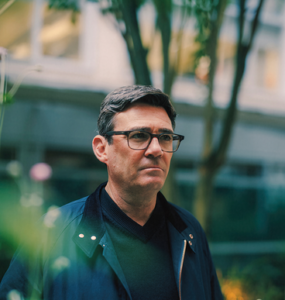
Andy Burnham, September 2025
David Hearst writes in Middle East Eye on 13 July 2026:
It is easy, if not to say tempting, to be cynical about Andy Burnham. To describe him as a machine politician with a missing moral core, the perfect fodder for lobbies; the politician whose inner thoughts no-one really knows: the man who has been whisked from Makerfield to Downing Street with a minimum of scrutiny, due process, or debate. A man on a magic carpet.
Every instinct tells me not to take Burnham at face value. But that is not what I propose to do. I am going to take Burnham at his word when he apologised for the Labour Party’s policy on Gaza. There is a lengthy list of consequences entailed in this apology, which I spend the rest of this column writing about.
But for now, I am going to assume Burnham was speaking genuinely, out of conscience, and that this was the best possible start to his premiership.
First of all, he did not have to raise the issue of Gaza. There was no pressure on him to do so from a mostly pro-Israel Parliamentary Labour Party. The immediate issues he will have to face as prime minister are domestic ones: the cost of living crisis, his choice of chancellor, a flat-lining economy and the size of the domestic debt.
And, secondly, there was even less incentive to raise Gaza at the very time he was being crowned the next leader of the Labour Party by 322 Labour MPs, almost 80 percent of the party.
Why Gaza
On entering Downing Street, British Prime Minister Keir Starmer’s first act was to shut the door on Palestine. As leader of the opposition, he told LBC that Israel “had the right” to withhold power and electricity to the besieged enclave, a remark he tried to explain away under pressure but which only made it worse.
Burnham’s first words on the threshold of power were to apologise for most of what Starmer did not do on Gaza, although he praised his predecessor for pushing the recognition of the Palestinian state. The prime minister in waiting said the UK was too slow to call for a ceasefire, that Israel continues to violate it, that there is a surge of settler violence in the Occupied West Bank and East Jerusalem, and that Israeli Prime Minister Benjamin Netanyahu was “clearly attempting to make a two-state solution impossible”.
He vowed to look at further sanctions on Israeli settlers and banning trade with the settlements.
If Burnham has assets he is bringing to the job, assets that Starmer lacked, this was the incoming man putting them front and centre on show. The people who know Burnham in Manchester describe him as having a gift for listening to people and seizing the public mood.
He showed both traits during the bombing of the Manchester Arena, which was the nightmare start to his time as mayor, and the moment he was told that Manchester would get just £22m (approx $30m) for testing and tracing Covid. His feisty reaction earned him the title of “king of the north”.
In describing Gaza as a “scar on our collective conscience”, Burnham was seizing the public mood. For Gaza is no longer a niche issue of the left. It has become a mainstream bipartisan issue. At last we have a prime minister in waiting who acknowledges that. This is in itself no mean achievement.
However, saying Gaza is a scar on our collective conscience is easier than starting to heal the wound.