

An educator’s journey to death included neglect, starvation and violence in Israeli prison
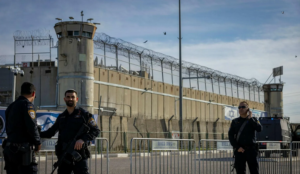
Ofer Prison, January 2026
Maya Rosenfeld reports in Haaretz on 6 May 2026:
“Do these tears know who made them fall? / Do these hearts know who made them recoil? / They recoiled when their shining light sank into the earth, / and the clods of earth knew not what they hold.” (Rabbi Yehuda Halevy, translated by T. Carmi).
On February 2, eight days after his release from five months of administrative detention, my friend, Khaled Daoud al-Saifi, an educator and leader, a resident of the Dheisheh refugee camp, about whose detention I wrote in Haaretz in December, died. He was 67 at the time of his death.
Al-Saifi, who suffered from a severe autoimmune disease, was released from prison on January 25 in critical condition, suffering from extreme shortness of breath, and was hospitalized at Istishari Arab Hospital in Ramallah. About two weeks earlier, he collapsed at Ofer Prison and prison authorities transferred him to the prison hospital in Ramla (Ayalon) Prison without informing his family or his lawyer, Riham Nasra. She only learned of the hospitalization on the day of his release, when she was asked to arrange for a Palestinian ambulance to pick him up at the Beit Sira checkpoint.
During his days in the hospital, Al-Saifi fought for his life with the courage that characterized him throughout his life. Tests showed severe damage to his lungs. Doctors tried to stabilize his condition, but without success. On the afternoon of the eighth day, he died of cardiac arrest.
Al-Saifi was barely able to speak in the hospital due to difficulty breathing. We communicated in writing, in which he began to share with me the ordeal of suffering, torture and abuse he experienced in prison: “Even in the Ramla prison hospital, they beat me… Things happened to me that you couldn’t even imagine,” he wrote. He promised to tell everything once his condition improved (“the moment I can breathe”), as he had done when I took his testimony after his previous administrative detention (January-June 2024). He fought against death with all his remaining strength, in part so he could bear witness.
Only little is known about the last 12 days of his detention: he collapsed, his condition deteriorated and he was released in critical condition. But his journey to death began five months earlier, when he was placed in administrative detention for his activities at the community center he headed.
The Shin Bet security service personnel who demanded his detention, the military commander who signed the detention order, the military judge who approved it, the military judge who rejected his lawyer’s appeal, the military judge who approved the extension of the detention period and the Supreme Court justices who sanctioned the extension – all knew that Al-Saifi had little chance of surviving in prison. He was a sick man, and in his previous administrative detention, he was a victim of medical neglect, brutal violence and starvation, which exacerbated the rheumatoid arthritis he suffered from and damaged his bodily systems. The medical documents were on their desks.
It was clear that in the current detention too, he would suffer from violence, starvation and neglect, because this has been the policy towards security prisoners since October 7, and they could have known that the detention would likely kill him. Al-Saifi’s testimony about his previous detention and the circumstances leading up to his final detention raise suspicion that administrative detention was deliberately used to cause him fatal harm.
He says that from his second week at Ofer Prison, he received only about a third of the life-saving dose of medication he was supposed to take regularly, and his condition steadily deteriorated. Initially, his joints swelled and lumps appeared under the skin of his arms. Later, his hands and feet swelled, while he suffered from constant acute pain. All his requests to receive the necessary dose of medication and to see the prison doctor were denied. He lost more than 20 kilograms of weight and became very weak. “I felt like I was going to die,” he said.
Al-Saifi became a helpless disabled man who needed the help of his cellmates for every action. They also made sure to provide him with painkillers and saved their meager portion of jam to give to him. His desperate condition exposed him to increased harm from Masada personnel – the elite unit within the Israel Prison Service responsible for handling riots and violent inmate behavior in security prisoner facilities.
Al-Saifi described a recurring “procedure”: Masada personnel would burst into cells, ordering prisoners to lie face down on the floor at the far end of the room, where they would beat them with clubs and kick them with steel-toed boots. Then they would order them to strip naked, handcuff them and beat them again while they were naked. Since Al-Saifi was unable to get out of bed, the Masada personnel would lift him and forcefully throw him onto the floor. From the blows he sustained, two of his ribs and his dental bridge were broken.
Thanks to his lawyer’s uncompromising struggle, a military judge finally ordered the Israel Prison Service to provide Al-Saifi with the medication he needed and the Supreme Court shortened his previous administrative detention by two and a half weeks. Thus, he walked out of prison on June 26, 2024, on his own two feet.
After his release, Al-Saifi underwent prolonged rehabilitation treatments, but his body did not overcome the trauma. He feared re-arrest. It was clear to him that his body would not be able to withstand prison violence again. The dread of renewed detention haunted him from the day of his release, and not without reason. Dread and uncertainty are an inherent element of administrative detention: because an administrative detainee is not imprisoned for an offense committed, but due to a hypothetical danger supposedly posed by them, their release is always conditional. They never know when they will again be considered dangerous.
Therefore, Al-Saifi refrained from expressing himself on social media, kept a low profile and immersed himself in work at the Ibda’a (“Creation”) community center, which he founded in 1994 and managed since its inception. The blow to Dheisheh during the war in Gaza posed a severe challenge. Even before, camp residents were living precariously: lockdowns and travel restrictions that Israel imposed in the West Bank ever since the second intifada (October 2000) doomed many to unemployment, reduced the residents’ living space to the Bethlehem district, surrounded by settlements, and tightened the army’s and Shin Bet’s control over their lives.
Nevertheless, Dheisheh residents persevered, mainly due to the strong family ties preserved within their refugee community: parents clung to their jobs in local institutions and continued to provide for unemployed, university-educated sons and daughters; Palestinian Authority employees supported the families of their laborer brothers who lost jobs in Israel; business owners who did not collapse helped relatives and acquaintances with loans and employment.
The suffocating siege Israel imposed on the West Bank from the first day of the war in Gaza undermined these mechanisms of mutual support and aid and threatened to collapse them. The gates to work in Israel were hermetically sealed, the low wages of PA employees were further cut due to Israel’s confiscation of Palestinian tax revenues, businesses closed and many were fired. All this occurred under the shadow of violent raids by the army and Shin Bet, mass arrests among youth, adults and elderly people, injuries and killings, as well as prisoners who returned from prison wounded in body and spirit.
Al-Saifi and his colleagues at Ibda’a were determined to continue the center’s activities. Although revenues from payments for nurseries, kindergartens, clubs, youth centers and the guesthouse significantly decreased, with the help of surpluses from previous years, frugal management and donations from abroad, all educational facilities continued to operate. Rarely did I hear joy in Al-Saifi’s voice during the period between his first and second detentions, but his pride was unmistakable when he spoke about the center’s special events: study days organized by the diabetes club, musical performances by the children’s and youth orchestra and end-of-year parties at the kindergartens. “We have on this land what makes life worth living” Mahmoud Darwish wrote in one of his poems. At Ibda’a, they insisted that this would also be true on Dheisheh’s land.
However, in February 2025, the IDF area commander issued a six-month closure order for the center, claiming the place “is used for unauthorized association activities,” although he did not declare it an illegal nonprofit organization. Al-Saifi did not give up and managed to reach a kind of arrangement: one of the buildings would be closed, some activities would cease, but community services would continue to operate in the other building. He eagerly awaited the expiration of the order in August 2025. The order was not renewed, but Al-Saifi was arrested and placed in administrative detention.
I always knew that Al-Saifi was much loved and respected in Dheisheh, but only at his funeral did I realize how much the appreciation for him transcended generations and the importance his loved ones attributed to his educational work. It was a stormy and rainy day. Dheisheh came to a standstill. Shops and businesses closed. Workers did not go to work or returned early, to attend the funeral. Palestinian Authority officials held an honor guard at the entrance to the government hospital in Beit Jala, from where the procession set out to his family home in the camp. The next stop was the mosque, where crowds gathered before heading to the cemetery in the nearby village of Artas.
As the procession made its way on foot from Dheisheh to Artas, friends and acquaintances of Al-Saifi gathered at the small cemetery. We waited there for a long hour in silence under pouring rain, each immersed in their grief. I was stood next to Issa Qaraqe, former Minister of Prisoners’ Affairs in the Palestinian Authority, a writer and publicist and a friend of Al-Saifi, who recounted his last days in heartbreaking laments. In front of us stood Saleh Abu Laban, one of the first prisoners from Dheisheh, also a former senior PA official, writer, friend and partner in Ibda’a’s management, who let the rain soak him to the bone.
When the procession arrived, masses of mourners surrounded the grave plot and listened to the eulogies, which at times sounded as if they were all written by the same person: Al-Saifi did not carry a weapon; he carried an idea, a dream, everyone reiterated. And ideas cannot be imprisoned or killed. Al-Saifi, the teacher, the educator, opened new horizons – in sports, music, dance, art and creativity – for generations of children and youth. We will continue to follow in his footsteps. And I thought, my brave friend, noble of spirit, broad of horizons and heart. You looked death straight in the eye, but it did not lower its gaze. Its agents, who multiplied and filled the land, reared their ugly heads and cut short the song of your life. “There was a man – and behold: he is no more.” And there is no solace.
Dr. Maya Rosenfeld is a researcher of Palestinian society and politics in the occupied territories and the diaspora.
This article is reproduced in its entirety