

A village erased: Yanoun’s families forced out after years of pressure
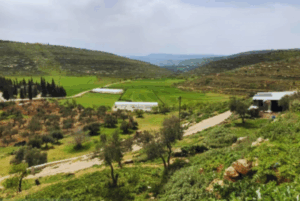
The Palestinian village of Yanounm in the occupied West Bank
Fayha Shalash reports in The Palestine Chronicle on 8 January 2026:
Fawzi belongs to one of the ten families that lived in Yanoun before the village was forcibly emptied. Speaking about his years there, he recalled a life defined by stability and self-reliance—now violently taken from them.
“We used to cultivate the land around us, which stayed green throughout the year,” he told The Palestine Chronicle.
“We planted whatever we wanted and lived off it. We gave to the land, and it gave back to us. We grazed our livestock safely and slept in our courtyards because of the area’s tranquility. We didn’t feel like we were living under occupation.”
After the year 2000, illegal Israeli Jewish settlers intensified their pressure on Yanoun, a fertile Palestinian community surrounded by farmland and natural springs. The village’s agricultural richness made it a clear target within a broader system of settlement expansion and land seizure.
Harassment became systematic. Illegal settlers assaulted residents, chased them from their fields, and stormed their homes, invoking claims over the Maqam Nabi Nun—a local shrine long known to Palestinians—which some Jewish traditions identify as the tomb of Joshua, son of Nun.
Although illegal settlers designated the site as a Jewish holy place, Palestinians have lived continuously in Yanoun for centuries. Similar religious claims have repeatedly been used across the occupied West Bank to justify settlement expansion and the confiscation of Palestinian land. “They would storm the area weekly to harass us and try to force us out,” Fawzi said. “But we refused to leave our land and our homes. We resisted.”
The attacks escalated sharply after the start of the genocidal war on Gaza, in October 2023. Armed settlers increasingly entered Yanoun under the protection of the Israeli army, which not only enabled the assaults but also directly enforced the displacement.
“The intensity of the attacks didn’t make us consider leaving, even though they destroyed our homes, the village school, and confiscated our belongings,” Fawzi said. “When they realized we would not leave, they gathered two weeks ago and gave us a deadline to evacuate.”
Residents refused. Shortly afterward, Israeli forces entered the village and forcibly expelled them at gunpoint—methods that mirror those used by settler militias during the Nakba of 1948.
“We left filled with anguish and pain,” Fawzi said. “Everything we had built was scattered before our eyes like a mirage. Now we are searching for shelter after living with dignity in Yanoun. We ask the people of Aqraba and neighboring villages to host us until we find somewhere to live—while our hearts remain in Yanoun.”