

Why Viktor Orbán’s defeat in Hungary won’t impact European policy toward Israel
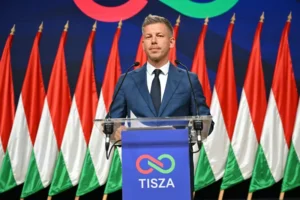
Péter Magyar, leader of the pro-European conservative Tisza Party, speaks at a press conference the day after his landslide election victory, 13 April 2026
William Noah Glucroft writes in Mondoweiss on 16 April 2026:
Europe’s authoritarian slide slowed slightly this week with Péter Magyar’s decisive win in Hungary, ending 16 years of Viktor Orbán’s illiberal rule. Yet in celebrating his electoral defeat, Europe’s ruling class seems to have been too distracted by the sound of the collective sigh of relief to notice—or care about—Orbán’s more lasting victory.
European democracies these days are looking a lot more like his Christian civilizational vision than any cosmopolitan opposition to it.
You know the Overton Window is broken when simply sounding less like a Nazi than Orbán gets you VIP treatment in the European Union—the post-WWII “peace project.” Magyar may have, for now, stopped the patient’s bleeding, but the ailing body politic of European democracy still lacks the medicine to save it. His is not the cure we have been waiting for.
While a few of his policy positions may combat oligarchic corruption and working-class malaise, Magyar’s real appeal lies in his adherence to the officially sanctioned status quo—as we saw when Donald Tusk returned to power in Poland. The continued degradation of human rights, curtailing of freedom of (human) movement, and militaristic boosterism are fine so long as European Council meetings can end a little earlier, without the headache of Hungary vetoing the EU’s moralizing and strategically listless “whatever it takes” support for Ukraine.
The main difference these days between far-right nativists and the more “respectable” radical centrists to which Magyar belongs isn’t substantive, but rhetorical. As long as you don’t say the quiet part so loudly, you are free to keep undermining the social contract—and European and international law—at will.