

The Gaza genocide radicalized the world — and there’s no going back
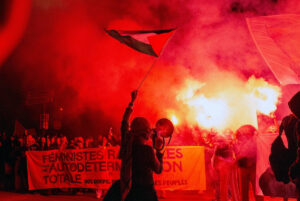
An activist waves a Palestinian flag at the front a feminist march in Paris, 7 March 2025
Tareq Baconi writes in +972 on 24 December 2025:
October 7, 2023, marked a paradigmatic rupture in how Palestine is discussed and imagined. Until that moment, international discourse had been trapped in the vocabulary of statehood and peace processes. The Palestinian question was framed as a conflict to be managed rather than a structure of domination to be dismantled, but October 7 forced the world to confront the realities Palestinians have long named: settler colonialism, the ongoing Nakba, Zionism, and Israeli apartheid.
This rupture is not merely rhetorical; it marks a substantive shift in global political understanding. Discourses of decolonization and accountability now permeate arenas once confined to the diplomatic language of a two-state solution. Israel’s assaults on Gaza have shattered the pretense that its violence is episodic or defensive, exposing genocide as a structural feature of its settler-colonial project.
For Palestinians, this moment reaffirms a longstanding truth: liberation cannot be secured through negotiation within an unjust system but requires confronting the structures that enact their dispossession and erasure.
For the world, the genocide has catalyzed a broad radicalization. When crowds march through global capitals demanding a free Palestine, they simultaneously articulate demands for the abolition of racialized capitalism, extractive regimes, climate injustice, and all forms of contemporary fascism. Palestine is understood through an intersectional lens, one that binds these struggles together. This radical understanding of structures of power reframes Palestine not as an isolated crisis but as a lens through which the broader architecture of global domination becomes visible.
The rupture of October 7
In the months leading up to October 7, the conditions on the ground had already rendered the pre-existing paradigm untenable. Palestinians were managed through aid and economic incentives rather than granted rights or justice; the entire international architecture — the peace process, donor frameworks, and diplomatic language — functioned to contain and marginalize Palestinian aspirations while legitimizing Israel.
Before October 7, the world treated Israel as a legitimate state within the family of nations, while Palestinians were cast either as a humanitarian problem to be managed through aid or as a security threat to be contained within the frameworks of the “War on Terror.” Beginning in 1993, the Oslo process — with its endless negotiations and conferences — sustained the illusion of progress while entrenching apartheid. In this context, diplomacy functioned as a form of containment: the so-called “peace process” managed colonial violence by translating it into technocratic language.