

Locked in despair: Palestinian hostages in Israeli prisons
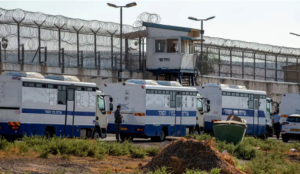
Gilboa Prison
Layth Hanbali reports in Tribune:
‘Our cells have turned into dungeons.’ Palestinian prisoners in Israeli jails and detention centres have slowly been able to relay harrowing stories of the Israeli Prison Service’s brutal crackdown on them since 7 October. They are sharing chilling testimonies in the few opportunities they have to make contact with the world outside their cell — lawyer visits and when a prisoner is freed.
Palestinian prisoners have engaged in decades-long struggle in Israeli jails. Many have undertaken lengthy hunger strikes to improve their conditions. Through their struggle, they secured access to televisions, radios, books, stationery, family photos, and cooking slabs in their cells. They ran self-funded canteens and made crafts that could be given to their relatives during visits, and they were able to access the yard for the parts of the day where they could interact with other prisoners. But all this has now changed. Prisoners are describing the situation in prisons as akin to the grim situation back in 1967 at the start of Israel’s military occupation.
Escalating Brutality
Since 7 October, the Israeli Prison Service (IPS) has withdrawn all prisoners’ hard-won rights and concessions. The IPS has significantly restricted access to water, with one prisoner reporting, ‘Detainees have had to resort to drinking foul, polluted water from taps in their cells.’ While prisoners could cook for themselves before 7 October, the IPS shut the canteens and confiscated cooking slabs. The IPS is underfeeding prisoners and providing unhygienic meals: one prisoner reported being served chicken that was so inadequately cleaned that it still had feathers. Personal and communal objects have been confiscated, leaving each prisoner with only one change of clothes and a pair of flip-flops; the IPS has confiscated shoes.
The IPS has imposed this crackdown over several stages, conducting frequent searches and raids over the past four weeks, during which prisoners were usually handcuffed, beaten and harassed. One prisoner reported the following:
‘On 12 October, the measures escalated… In the morning, a suppression unit stormed our neighbouring ward, harassing prisoners in their cells. Screams, sounds, and beatings grew louder. On one of the worst days, 23 October, at 9:00 AM exactly, the suppression units entered our cell. The search went on well into the night, until 11:00 PM. We were cuffed without electricity or water.’
At the same time, the IPS has limited prisoners’ ability to access medical care, whether inside prison clinics or outside. All family visits have been halted. Many do not even know the whereabouts of their children in prison, let alone the conditions of their incarceration. The International Committee of the Red Cross is unable to inspect and report on conditions. Families and friends of prisoners have staged several sit-ins at the Red Cross offices, at one point sealing their doors shut, in protest at the Red Cross failing in its mandate regarding Palestinian prisoners and failing to exert sufficient pressure on Israel to restore prisoners’ rights.