

Israel’s arbitrary proceedings against 2 Sumud Flotilla activists: abduction in international waters, torture
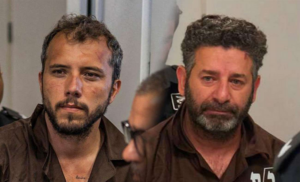
Brazilian activist Thiago Avila (L) and Spanish activist Saif Abukeshek are escorted by prison service guards to a hearing at the District Court in Ashkelon, Israel. 3 May 2026
Euro-Med Human Rights Monitor reports on 5 May 2026:
The Israeli subjection of Spanish activist Saif Abu Keshek and Brazilian activist Thiago Ávila to arbitrary judicial and investigative procedures following their abduction in international waters is extremely concerning.
The Israeli navy unlawfully intercepted vessels of the Global Sumud Flotilla in international waters near Greece while the flotilla was carrying out a declared civilian humanitarian mission to deliver aid to the Gaza Strip and lift the blockade.
Both activists appeared this morning before the Israeli Magistrate’s Court in Ashkelon for the second time in two days, in hearings to extend their detention following their unlawful transfer to Israel.
The court ordered a six-day extension of their detention until Sunday morning, 10 May 2026, despite no formal charges being filed and although their detention remains solely for investigative purposes. The decision was based on vague suspicions unsupported by sufficient evidence, as well as secret material that neither the activists nor their lawyers were allowed to access or effectively challenge.
According to legal and human rights sources, the Israeli prosecution has presented charges including wartime collaboration, correspondence with a foreign agent, membership in a terrorist organisation, and providing alleged services to a terrorist-designated entity. Both activists and their legal representatives deny these allegations.
The court’s decision to grant the Israeli authorities the full extension requested, without imposing clear judicial limits on the investigation, heightens concerns that detention, interrogation, and secret evidence are being used to punish and criminalise peaceful humanitarian activity. This is particularly troubling given the activists’ continued isolation, exposure to constant bright light, blindfolding during transfers and medical examinations, and their ongoing hunger strike since Thursday morning, 30 April, in protest of their detention and treatment.
Making a legal case of security and terrorism out of participation in a declared civilian humanitarian flotilla reflects a dangerous and arbitrary use of the judicial system to criminalise humanitarian work and strip it of protection. It sets a dangerous precedent, enabling the prosecution of solidarity activists and humanitarian workers as security threats rather than safeguarding them as civilian actors.
This approach erodes protections for civilians and those seeking to assist them, undermines guarantees of personal liberty, fair trial, and due process, and deters peaceful humanitarian initiatives aimed at lifting the blockade, thereby contributing to the continued siege, starvation, and isolation of Gaza’s population.
Both Ávila and Abu Keshek reported being subjected to severe physical and psychological violence from the first moments of their unlawful detention. They were kept handcuffed and blindfolded for prolonged periods at sea under degrading conditions.
According to testimonies relayed by lawyers and released activists, Abu Keshek was separated from other detainees and subjected to severe ill-treatment, with witnesses reporting that his screams were audible on board. Ávila reportedly lost consciousness twice due to the assaults he endured. Testimonies also describe beatings, isolation, deprivation of basic needs, and injuries among several flotilla members, warranting an immediate independent investigation and accountability for all those who ordered, carried out, or concealed these acts.