

In the West Bank, ‘protective presence is not protecting anyone anymore’
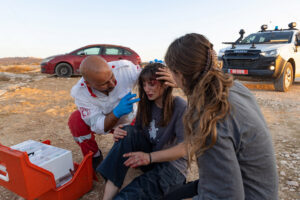
An Israeli solidarity activist is injured after being attacked by masked Israeli settlers in the village of Qawawis in Masafer Yatta, 28 August 2025
Charlotte Ritz-Jack reports in +972 on 27 March 2026:
As sirens from Israeli settlements echoed across the Jordan Valley during the first week of Israel’s war on Iran, the last remaining residents of Shkara, a small Palestinian hamlet outside the town of Duma, hurriedly packed their belongings. The alarms warned of an incoming missile attack, urging people to take cover. But in Shkara — where, like most Palestinian communities across the occupied West Bank, there are no shelters — residents were not seeking protection from Iranian fire. They were fleeing Israeli settlers.
On March 1, the day after Israel launched the war with Iran, settlers opened fire on residents in the outskirts of Duma, wounding three, and attacked others with sticks. Two days later, they cut off Shkara’s electricity. The army then declared a closed military zone in the areas most vulnerable to settler attacks, expelling Israeli and international activists. Hours later, settlers destroyed a family home. Within days, the area’s remaining 11 families had fled.
Shkara is one of dozens of Palestinian communities across the West Bank that have requested what is known as “protective presence” on a constant basis since October 7, a period in which state-backed settler violence has reached record levels and forced at least 76 entire villages or hamlets off their land. Israeli and international activists live alongside residents, sharing meals, conversations, and routines. Some villages have built guesthouses with bunk beds or mattresses to accommodate activists, while in others, activists sleep in families’ houses.
In Ras Ein Al-Auja, a shepherding community in the southern Jordan Valley, activists began providing a 24/7 protective presence in the summer of 2024. Over time, some regular activists became woven into the village’s social fabric, attending births, weddings, and funerals alongside residents.
Andrey X — a journalist who posts footage of Israeli settler and military violence to his hundreds of thousands of social media followers every day — was the first activist to live in the village full-time, moving there in May 2024. Every morning, he would accompany shepherds grazing their flocks and villagers driving trucks to collect water; in the evenings, when settlers generally entered the village with their own herds, he would try to get them to leave. “There were five or so incidents per day,” X recalled in an interview with +972 Magazine.
Protective presence is premised on the idea that Israeli settlers and soldiers treat fellow Israeli citizens and foreign nationals with greater restraint than Palestinians. But these assumptions have started to break down, as activists increasingly fall victim to physical attacks, military restrictions, and deportation, while violence against Palestinians continues to intensify.