

How Israel is preparing the expulsion of Palestinians from E1
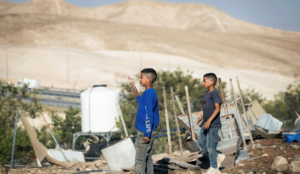
Palestinian children in Khan al-Ahmar, located within the E1 area, May 2026
Jessica Buxbaum reports in The New Arab on 4 June 2026:
From 1997 to 2007, Israel transferred 150 families from the Arab al-Jahalin Bedouin tribe from their villages in the eastern Jerusalem hinterland to a satellite of the Palestinian town of Al-Eizariya known as Al-Jabal, or the mountain.
Displaced next to a Jerusalem municipal landfill, these Bedouins not only lost their homes but also their traditional way of life, now living in stone townhouses with limited grazing land for their livestock.
The homes they were expelled from are today a part of the Israeli settlement of Ma’ale Adumim. And just like nearly 30 years ago, the remaining al-Jahalin Bedouins in the East Jerusalem periphery are again being pushed out for the creation of Israel’s E1 settlement.
In March 2026, the Israeli government initiated a plan to expand the al-Jabal neighbourhood with 950 housing units on approximately 20 acres of land. While not explicitly saying who the new neighbourhood is for, rights groups and Jahalin Bedouins say the “Shami neighbourhood” is intended to be the site where East Jerusalem Bedouins will be relocated to.
“[It] is meant to be used as the excuse for the justification for the expulsion of the Palestinian communities and say, ‘They have an alternative. We allocated this land for them,’” Hagit Ofran, co-director of Israeli activist group Peace Now’s Settlement Watch project, told The New Arab.
Al-Jabal was established not to offer land and housing for Palestinians, but because Israel’s Supreme Court ruled, at the time of al-Jahalin’s displacement, that the state cannot expel a community without providing them an alternative.
In response to the Shami plan, 208 individuals from the Bedouin communities of Khan al-Ahmar, Arab al-Jahalin, and Abu Nuwar filed an objection with the Israeli planning rights group, Bimkom, against it, arguing the plan is part of efforts to forcibly remove these communities from their homes east of Jerusalem.