

Weaponised antisemitism and Israeli Gaza genocide denial tactics
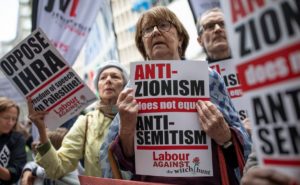
Protest against the IHRA definition of antisemitism in London on 4 September 2018
Emad Moussa writes in The New Arab on 12 May 2026:
Genocide denial frameworks identify recurring strategies: minimising victim numbers, victim-blaming, questioning witnesses, and reframing violence as unavoidable. Contemporary discourse surrounding Gaza reproduces many of these strategies, but also extends beyond classical typologies of denial.
Unlike historical cases of genocide, which relied on reconstructing past events, Gaza has been a battlefield of competing narratives in real time. Instead of withholding information, Israeli and pro-Israeli systems of denial have reinterpreted and reconstructed information as it emerged. Even after major hostilities in Gaza eased in October 2025.
A prominent strategy has been stretching antisemitism into extreme “definitional elasticity”, further blurring the line between true prejudice and dissent. This acts as a discursive deterrent, discouraging scrutiny of Israeli crimes while repositioning Israelis as victims of those subjected to their violence.
However, the broad scale of Israel’s atrocities in Gaza has made this effort unsustainable. In response, Israeli Hasbara and its allies have leaned further into this conceptual elasticity, at times to the point of absurdity.
For example, the US-based Facebook page JewBelong habitually cites antisemitic incidents, for valid reasons, but extends them beyond a reasonable context. One post reads: “Artemis II proves how far we’ve come. Antisemitism proves how far we haven’t.” While the sentiment may resonate, the framing is detached from context.
Another post escalates to overt bravado, a shift from the dominant victim narrative: “If you thought the 10 plagues were bad, wait till you see what happens if you don’t stop f—ing with the Jews,” framed as if spoken on God’s behalf.
Victimhood