Concerns are building that Israel's new government will revive controversial plans to take over Palestinian- and church-owned land on the Mount of Olives.

Christian pilgrims take part in the traditional Palm Sunday procession on the Mount of Olives, occupied East Jerusalem, March 28, 2021. (Yonatan Sindel/Flash90)
It might be assumed, ordinarily, that the declaration of an important heritage site as a protected national park would be a cause for celebration. But in occupied East Jerusalem, Israeli government plans to do just that invoke quite the opposite sentiment. For Palestinian residents and critics, such moves tend to serve as a “greenwashing” cover for a land grab — part of a long history of accelerating Judaization of the city while stymying the natural growth of local Palestinian communities.
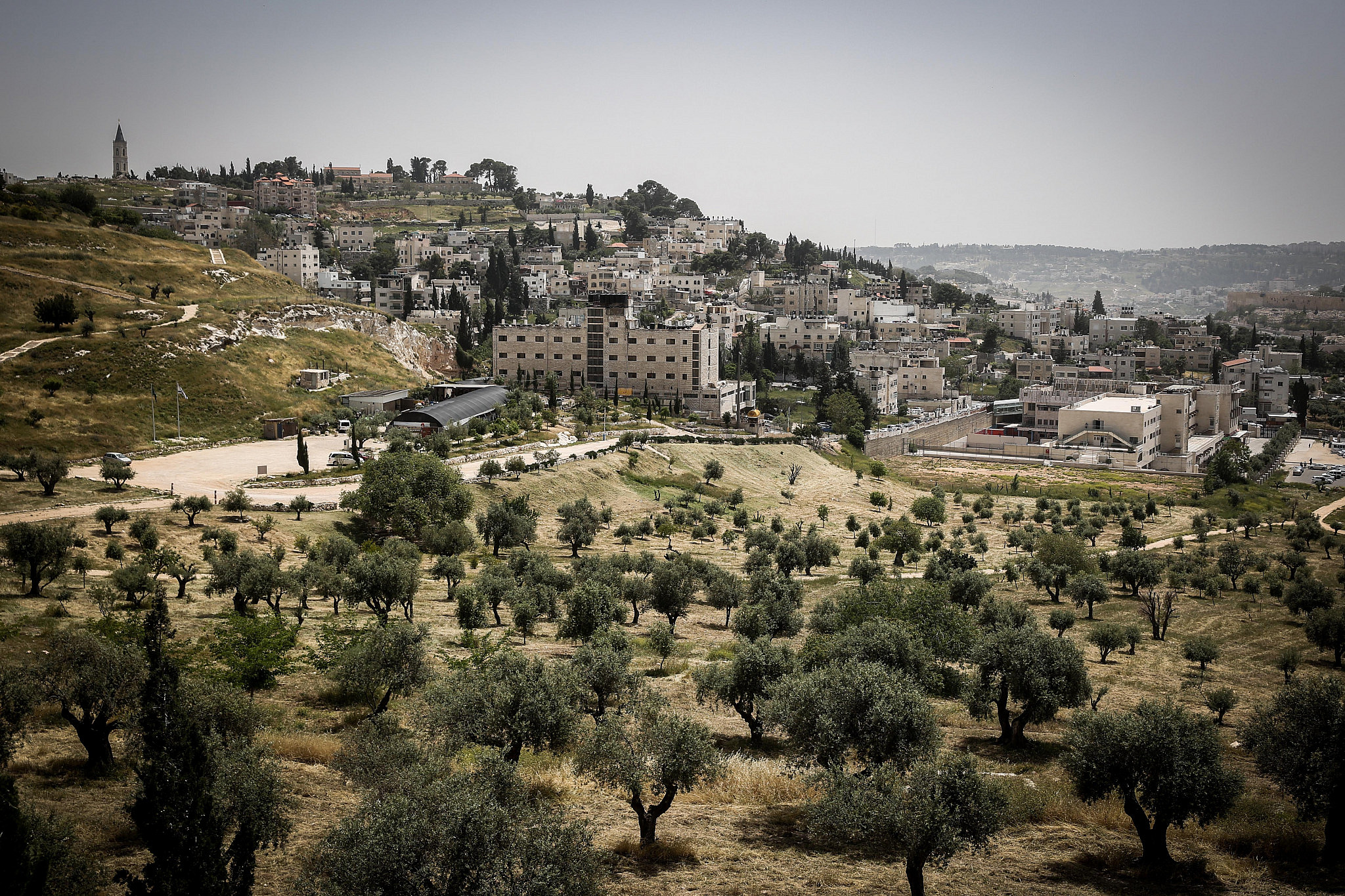
The latest of these proposals aims to expand an existing national park, which currently encompasses the walls of the Old City of Jerusalem, to include the Mount of Olives — home to a long list of Christian holy sites, and which is also important in Muslim and Jewish traditions. The project first came to light last February, when senior government officials inadvertently revealed it, not understanding its significance.
The plan would effectively hand oversight of the land in the Mount of Olives from the Jerusalem Municipality to the Israel Nature and Parks Authority (INPA), which, as a national body, is not directly responsible for the city’s residents and can therefore initiate projects as it sees fit.
The slated park would include sites belonging to various Christian denominations, including the Greek Orthodox Patriarchate, the Armenian Patriarchate, the Catholic Franciscan Custody of the Holy Land, and the Russian Orthodox Church. The nearby Jewish cemetery was apparently excluded from the proposal after Jewish religious authorities opposed its initial inclusion.
The proposed extension, which also includes the Hinnom Valley (Wadi Rababa), Abu Tor, the Kidron Valley, and Wadi al-Joz, would have far-reaching ramifications for the area’s churches and residents. Palestinian neighborhoods would be severed from the Old City, and residential development for these communities — even that on private Palestinian land, which would be included in the national park — would face even more restrictions. Construction, cultivating land, and even photographing in the park area would require a permit from the INPA. In other words, the Mount of Olives’ existing residents would retain ownership of their land, but lose all autonomous rights over their property.
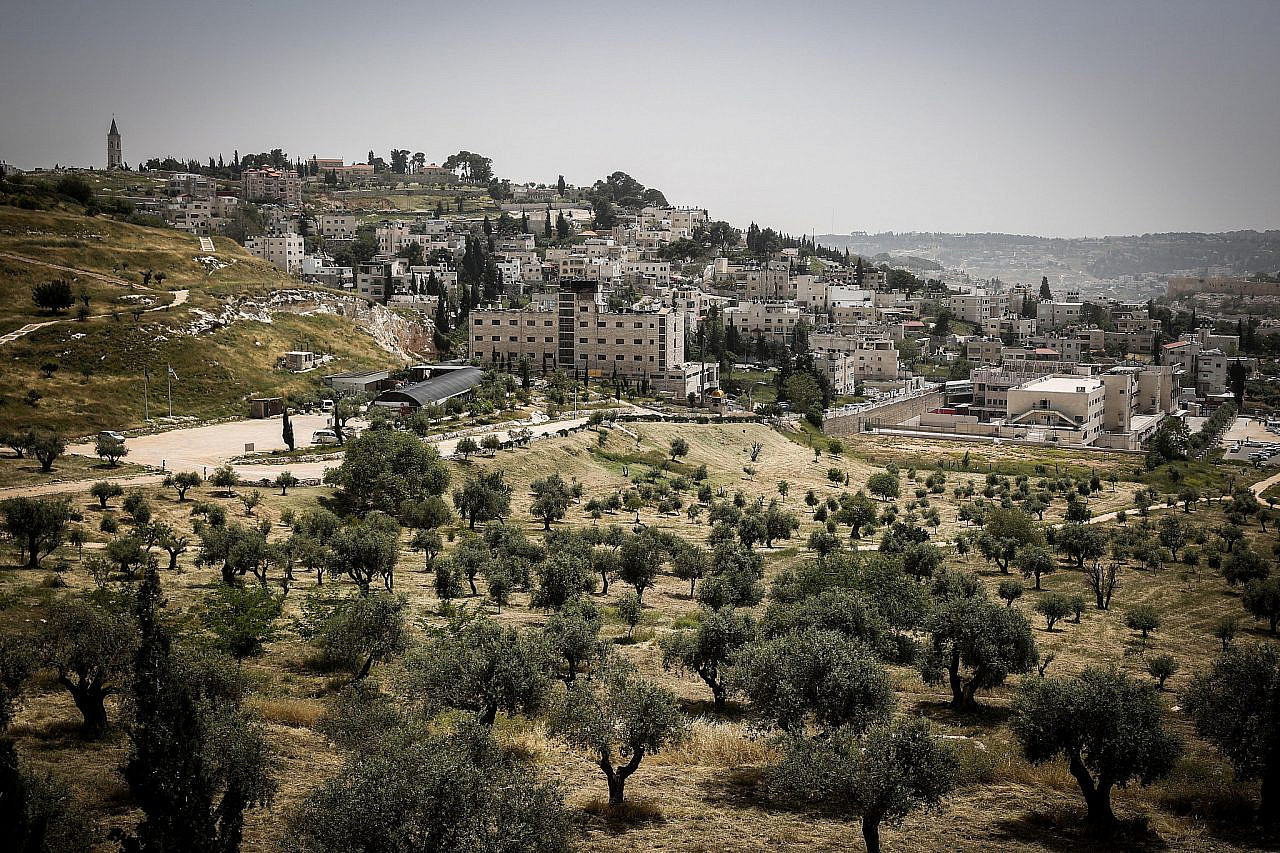
View of the Palestinian neighborhoods of A-Tur (above) and Wadi Joz (below) in occupied East Jerusalem, near the Mount of Olives, April 27, 2015. (Hadas Parush/Flash90)
Shortly after the plan was revealed, Meretz Knesset member Tamar Zandberg — then serving as minister of environmental protection — got wind of it and removed it from the agenda of the Jerusalem Municipality’s Local Committee for Planning and Construction. The Committee then announced that it would not promote the plan without “coordination and communication with all relevant officials, including the churches [that oversee holy sites on the Mount of Olives]” — which had not been done in the course of formulating the proposal.
But now Zandberg, along with the rest of her party, are gone from the government, with Benjamin Netanyahu having returned as prime minister at the head of Israel’s most right-wing, ultra-nationalist, and religious government in history. With this handover of power, human rights activists operating in Jerusalem are concerned that the Mount of Olives plan will soon be back on the table — and that, as it has long done in other areas of East Jerusalem, the settler movement will be working hand-in-hand with the government to achieve their biblical vision in the Old City Basin.
More …