

Israel sharply expands solitary confinement for Palestinian inmates, data shows
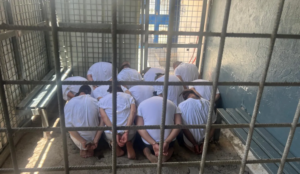
Prisoners in an Israeli incarceration facility in March 2026
Nir Hasson reports in Haaretz on 14 May 2026:
The Israel Prison Service sharply increased the use of solitary confinement against Palestinian inmates since 2023, including minors and women, according to data obtained by Physicians for Human Rights Israel through a freedom of information request, amid mounting criticism from rights groups that the practice can amount to torture.
The figures show punitive isolation of minors increasing from one case in 2022 to 50 in 2023 and 199 in 2024, while 4,493 adult Palestinian prisoners were held in isolation in 2024, nearly triple the 2023 figure; the number of women rose from two in 2022 to 25 in 2024.
The prison service responded to the rise, saying that since the start of the war there has been a “dramatic increase” in the number of security detainees, including minors, arguing that comparisons between conditions before and after Oct. 7 “distort reality,” and that it operates under a policy of “custodial governance” in which any breach of order or discipline is handled firmly and without compromise, in accordance with the law.
The Israel Prison Service distinguishes between two types of prisoner isolation: punitive isolation, formally limited to 14 days, and deterrent isolation, which can last up to six months and be renewed.
According to rights groups and researchers, most cases involve short-term punitive isolation, which they describe as a severe measure that can have serious psychological and physical effects, including increased risk of self-harm, anxiety, memory problems, confusion and hallucinations, as well as physical illness associated with prolonged confinement in a small, enclosed cell that also contains a toilet.
The use of isolation comes amid what rights groups describe as a sharp deterioration in conditions for Palestinian security prisoners in Israel since Hamas’ attack on October 7, 2023. Former detainees and lawyers report shortages of food, severe violence by prison guards, restrictions on books and personal items in cells and the spread of skin diseases.
Oneg Ben-Dror, from the detainees’ department at Physicians for Human Rights–Israel, said in a statement that “what was once an exceptional measure has become routine – including for minors and women.” She said the sharp increase in the use of isolation raises serious concerns about its impact on prisoners’ human rights and their mental and physical health.
This article is reproduced in its entirety